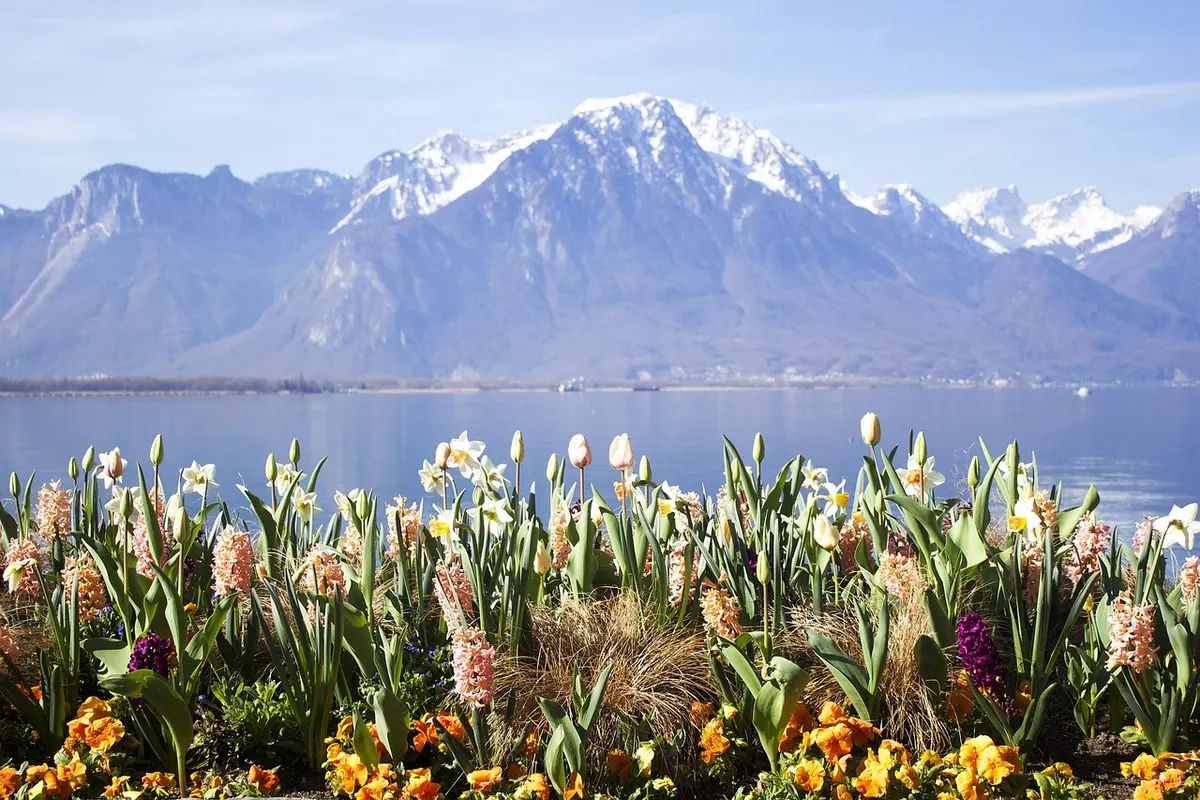
Spring color is decided in October. The daffodils you stop to admire in April were dropped into a hole, forgotten, and rained on for six months. Fall bulb planting is the least demanding job in the garden, and it buys you flowers for weeks before anything else is awake.
The trick is choosing bulbs that bloom at different times instead of all at once. The ten below are easy to find, easy to grow, and dependable nearly anywhere with a real winter. Bloom times shift with your climate, but the order holds.
Late Winter: The First Flowers of the Year
Snowdrops (Galanthus) are the earliest trustworthy bulbs, often opening in January or February with the ground still half frozen. Plant them three inches deep and three inches apart under deciduous shrubs or along the edge of a lawn. Dry bulbs from a bin are slow to settle in, so if a nursery offers them “in the green” in spring, take that option.
Winter aconite (Eranthis hyemalis) opens small buttercup-yellow flowers at almost the same moment, sometimes pushing up through snow. The tubers are tiny and dry out fast: soak them for a few hours before planting, then set them two to three inches deep. Once happy, they seed themselves under trees.
Crocus needs no introduction. Plant three inches deep and three inches apart, in sun, in quantity. Species such as Crocus tommasinianus and C. chrysanthus flower two or three weeks ahead of the big Dutch hybrids, so planting both stretches the show. Tommies are also the ones squirrels bother least.
Early Spring: Small Bulbs, Big Impact
Dwarf iris (Iris reticulata) grows four to six inches tall in violet-blue, carries a faint perfume, and is over in a fortnight. Set the bulbs three to four inches deep in sharp-draining soil at the front of a border or in a rock garden. Summer wet kills them; winter cold does not.
Siberian squill (Scilla siberica) is the deepest blue of the group. Three inches deep, three inches apart, and let it wander, because it will seed into the lawn and under shrubs. It blooms alongside the first daffodils, and the two look better together than either does alone.
Hyacinths are grown for scent as much as color. Plant six inches deep and five to six inches apart, in tight groups where you will walk past them. They fill the gap between the earliest daffodils and the tulips, and they are the best of the ten for pots.
Mid-Spring: The Workhorses
Daffodils (Narcissus) are the backbone of spring, and the reason to plant more than one variety. Each type blooms for about three weeks. Early sorts such as ‘Tête-à-Tête’, ‘February Gold’ and ‘Jetfire’ start the run; ‘Carlton’ and ‘Ice Follies’ hold the middle; ‘Thalia’ and ‘Pheasant’s Eye’ close it. Plant six to eight inches deep and four to six inches apart. Deer, rabbits and squirrels leave them alone, which is worth a great deal. Let the leaves yellow for six weeks after flowering, because the bulb is refilling for next year.
Grape hyacinth (Muscari armeniacum) sends up blue spikes in mid spring, right alongside the middle tulips. Plant four inches deep. Its leaves appear in autumn, which surprises people; leave them alone and they will carry the plant through winter. It spreads steadily, so give it room or deadhead the spent spikes.
Late Spring to Early Summer: The Big Finish
Tulips want depth: six to eight inches, four to six inches apart. Species tulips such as T. tarda and T. kaufmanniana are short, early and genuinely perennial. Darwin hybrids and Triumphs are the tall, glossy ones most of us picture, and in many gardens they fade after a year or two; either treat them as annuals or lift and store them once the foliage dies back. Plant them where perennials will grow up and hide the yellowing leaves. Squirrels dig tulips more than anything else on this list, so a sheet of chicken wire laid over the bed and pinned down is cheap insurance.
Alliums carry the season into June. ‘Purple Sensation’ goes four to six inches deep and Allium giganteum six to eight, following the usual rule of three times the bulb’s own height. The flower heads open after most tulips have finished, and left standing they hold their shape as dry skeletons into winter. Their leaves yellow early, so plant them behind something leafy.
Planting Depths and Spacing at a Glance
Most bulbs go in with the pointed tip up. If you genuinely cannot tell which end is which, crocus corms and aconite tubers included, lay them on their side and they will sort it out.
- Snowdrop: 3 in deep, 3 in apart, late winter
- Winter aconite: 2–3 in deep, 3 in apart, late winter
- Crocus: 3 in deep, 3 in apart, late winter to early spring
- Dwarf iris: 3–4 in deep, 3 in apart, early spring
- Siberian squill: 3 in deep, 3 in apart, early spring
- Hyacinth: 6 in deep, 5–6 in apart, early to mid spring
- Daffodil: 6–8 in deep, 4–6 in apart, early to late spring
- Grape hyacinth: 4 in deep, 3–4 in apart, mid spring
- Tulip: 6–8 in deep, 4–6 in apart, mid to late spring
- Allium: 4–8 in deep, 8–12 in apart, late spring to early summer
Getting Them in the Ground: What Actually Matters
Depth is a rule, not a suggestion
Plant at two to three times the bulb’s height, measured from base to tip. Deeper is safer than shallower in sandy soil. In heavy clay, stay at the shallow end and work in grit or compost before you plant.
Drainage beats fertilizer
Bulbs rot in waterlogged ground long before they starve. If your soil holds water, plant on a slight mound or dig coarse grit into the planting hole. Most bulbs already carry the energy for their first spring; a light dressing of balanced fertilizer at planting is plenty, and no amount of feeding fixes bad drainage.
Cold matters, and so does the lack of it
These bulbs need a stretch of cold to flower well. In mild-winter areas, buy pre-chilled bulbs or chill them yourself for eight to twelve weeks in the refrigerator, in a paper bag, well away from ripening fruit. Fruit gives off ethylene gas, which can spoil the flower buds inside the bulb.
Deal with diggers before they deal with you
Plant deep, water the bed to settle the soil, and lay chicken wire over the surface until the ground freezes. Daffodils, alliums and snowdrops are usually ignored. Tulips and crocuses are not.
A Simple Plan for Your First Fall
If you want the longest season with the fewest decisions, plant in layers. Dig one hole about eighteen inches across and eight inches deep, set in a ring of daffodils, cover them with half the soil, then tuck crocus, squill and grape hyacinths above them and backfill. Three heights, three bloom times, one patch of ground. Add a tall allium behind the group and a handful of tulips at the front, and you have color from January to June.
Buy the biggest, firmest bulbs you can find, get them in before the ground freezes, and mark the spot with a few short stakes so you do not dig into them in spring. Then wait. The waiting is the hardest part and the best part of fall gardening.
Photo: TesaPhotography / Pixabay